
Skin Health, Circadian Rhythm, Beauty Sleep
Beauty Sleep Is Clinical: How Darker Evenings, Serotonin & Circadian Rhythms Dictate Your Skin Health
By Your Esthie with the Bestie, Deana 💕💖 | Award- Winning Clinical Aesthetician, South Edmonton
Published: November 15, 2026
As the sun taps out earlier and late afternoon suddenly looks like 8 p.m., your body isn’t being dramatic—it’s reading real biological wind-down cues. Those darker evenings flip switches in your brain, hormones, and skin, opening the exact window when your barrier wants to repair, rebuild, and de-puff. Beauty sleep is not a cute slogan; it is a clinically documented overnight restoration cycle, and if you keep fighting it with doom-scrolling and erratic bedtimes, your skin will absolutely snitch on you.
Seasonal Darkness: Your Built‑In Wind‑Down Signal
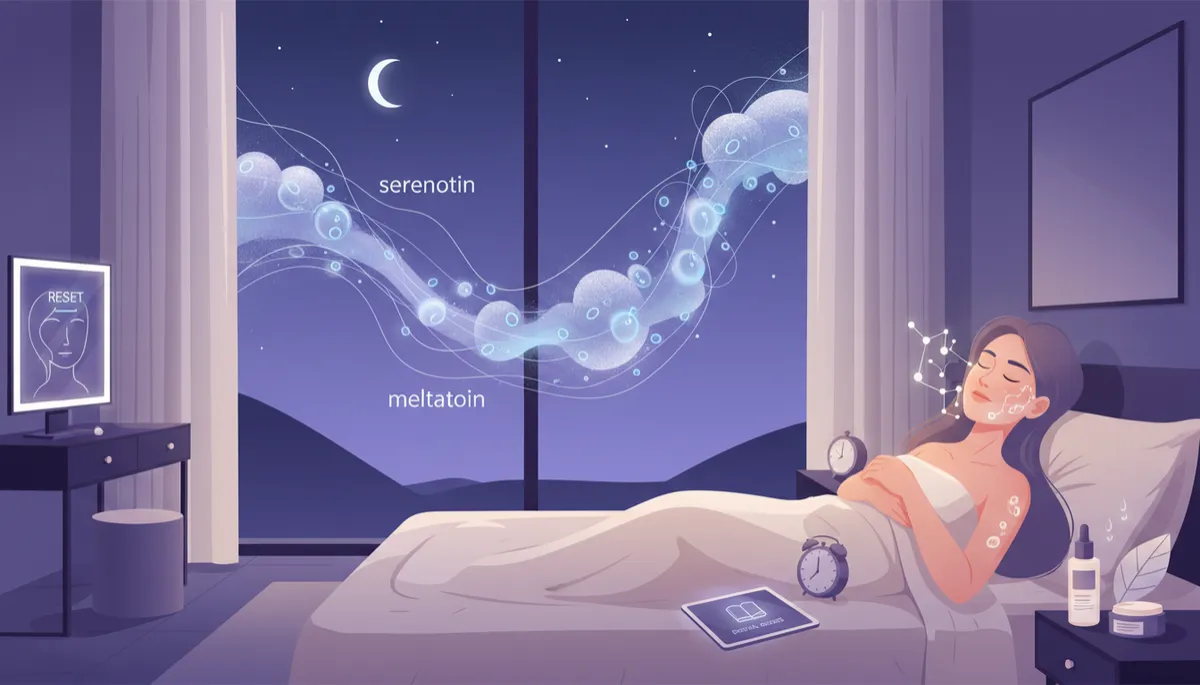
When afternoons start dimming earlier, your body reads that drop in natural light as a clear message: slow down. Your eyes send “it’s getting dark” data to the brain’s suprachiasmatic nucleus—the master clock that coordinates your circadian rhythm. From there, every system, including your skin, gets the memo that it’s almost time to stop defending and start repairing. If you ignore those cues and treat 9 p.m. like high noon, you’re essentially arguing with your own biology—and your skin loses that fight first.
The Science: Serotonin, Melatonin & Your Skin’s Circadian Rhythm
From Daytime Serotonin to Nighttime Melatonin
In daylight, your brain leans into serotonin—the “wake up, focus, function” neurotransmitter that keeps mood and alertness in check. As light fades, the pineal gland starts converting that serotonin into melatonin, your master sleep hormone and a serious antioxidant. This isn’t woo; it’s neuroendocrinology. Less light equals more melatonin, which tells your entire system, including your skin’s molecular clocks, that it’s time to shift from defense mode to deep repair (Sleep Medicine Reviews, 2026, Biegański et al.).
Melatonin, Growth Hormone & Overnight Cellular Repair
Once you’re actually asleep—not just horizontal with Netflix on—melatonin doesn’t just regulate your sleep–wake cycle; it acts as a potent free‑radical scavenger in the skin. It helps neutralize oxidative stress from UV, pollution, and blue light exposure (J. Invest. Dermatol., 2020). In parallel, during deep slow‑wave sleep, human growth hormone (HGH) peaks. That’s your collagen-rebuilding, tissue-repairing hormone, supporting fibroblasts as they fix daytime micro‑injury and helping restore barrier structure. Recent chronodermatology work shows that nighttime is when DNA repair, keratinocyte turnover, and barrier recovery run hottest (The Circadian Skin, 2026).
Translation: while you sleep, your skin is busy. Antioxidant defenses go up, microcirculation improves, and lipid and ceramide synthesis increase to patch up the barrier you spent all day dehydrating, rubbing, and UV‑exposing. You can’t “hack” around this with a fancy serum if you are chronically under‑sleeping. The biology does not care about your to‑do list.
How Much Sleep Does Your Skin Actually Need?
For full overnight recovery—think optimal microcirculation, collagen support, and barrier lipid replenishment—you’re looking at roughly 7 to 9 hours of consistent, uninterrupted sleep. Large 2026 datasets show a U‑shaped curve: both too little and too much sleep correlate with accelerated biological aging, including skin-specific aging markers (Nature, 2026). Hovering in that 7–8 hour zone is where your skin clocks function best and your repair pathways stay efficient.
One all‑nighter won’t destroy your face forever, but we do see measurable drops in firmness, hydration, and texture after even a single missed night, with some markers still not fully recovered two weeks later (Sleep, 2026, Zhu et al.). Chronic short sleep? That’s when fine lines, dullness, and chronic sensitivity stop being “random” and start being predictable.
💡 Optimizing your evening skincare and sleep routine? Explore our digital skin guides and online PDFs [INSERT PDF GUIDE LINK HERE] for step-by-step blueprints on nighttime barrier care, circadian-friendly routines, and realistic bedtime rituals that your skin (and sanity) can actually maintain.
The Cost of Disrupted Sleep on Your Skin
Elevated Cortisol: Collagen’s Worst Frenemy
When you cut sleep short, your body compensates by cranking up cortisol, the main stress hormone. Elevated cortisol does three things your skin absolutely hates:
It breaks down collagen and elastin, fast‑tracking fine lines and laxity around the eyes and mouth.
It ramps up inflammation, which is why your acne, rosacea, and eczema love to flare after a bad sleep week (Sleep & Skin Review, 2015–2025).
It slows wound healing and barrier recovery, so those post‑extraction marks and micro‑tears from cleansing sticks around longer.
Chronically elevated cortisol is basically pressing fast‑forward on your skin’s aging and irritation timeline. If you’re sleeping five fractured hours, living on caffeine, and wondering why your “barrier repair cream” isn’t fixing anything, this is your answer.
TEWL: Why Nighttime Dehydration Hits Harder
Your skin is not equally “sealed” 24/7. At night, transepidermal water loss (TEWL) naturally increases—your barrier becomes more permeable. This is normal physiology and part of why actives can penetrate better in the evening, but it also means you’re more prone to dehydration while you sleep. Clinical 2026 trials on circadian-aligned skincare show that targeted nighttime formulas can significantly reduce TEWL and boost hydration (Drug Design, Development and Therapy, 2026).
Now layer poor sleep on top of that. Fragmented or short sleep further impairs barrier function and can worsen TEWL, leaving you with that tight, papery, “why does my moisturizer do nothing?” feeling by morning. This is exactly why hydration before bed is non‑negotiable: think ceramide-rich moisturizers, humectants like glycerin or hyaluronic acid, and an occlusive or balm if you’re very dry or sensitized.
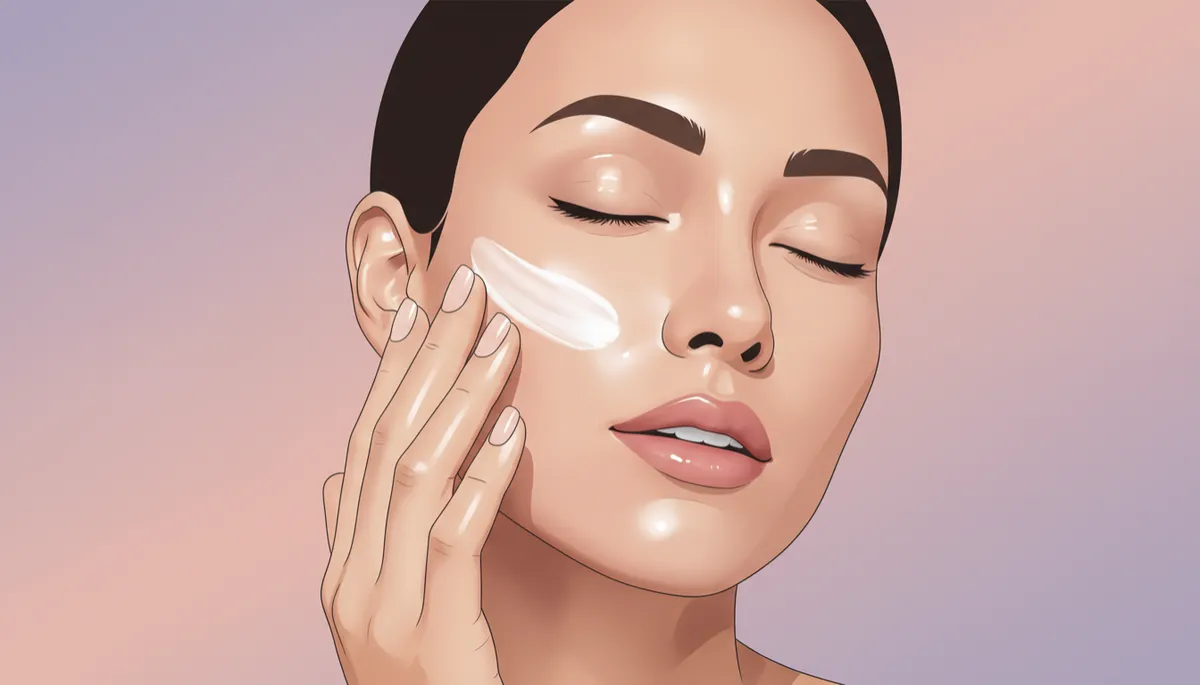
Locking in hydration before bed helps counter natural nighttime water loss and supports barrier repair.
When Your Skin Needs a Hard Reset: In‑Studio Support
If you’ve been in a long‑term situationship with bad sleep—shift work, new parent life, chronic stress—your skin may not bounce back with home care alone. Chronic circadian disruption has been linked to impaired barrier integrity, increased sensitivity, and even higher long‑term photoaging risk (Advances in Skin & Wound Care, 2026). In that case, we bring in the big guns: targeted, in‑studio treatments that flood the skin with hydration, calm inflammation, and support collagen while you literally lie down and do nothing. That’s the kind of multitasking I approve of.
✨ Need to reset dull, fatigued skin from seasonal changes? Experience the ultimate deep hydration restore with our Signature LPB Facial—book or explore the treatment here: [INSERT LPB FACIAL BOOKING LINK HERE]. This is your “control‑alt‑delete” for stressed, sleep‑deprived skin.
The Bottom Line: Earlier Darkness Is Your Skin’s Reminder, Not an Inconvenience
As evenings darken earlier, your body is not being lazy—it’s being efficient. Dimming light nudges serotonin toward melatonin, flips on your sleep circuitry, and opens the nightly repair shift for your skin’s circadian machinery. When you respect that window with 7–9 hours of real sleep, consistent bedtimes, and intentional pre‑bed hydration, you’re doing one of the most powerful non‑topical skincare interventions available. No LED mask will out‑perform a regulated sleep schedule over time.
So, be honest with yourself: as the evenings get darker, are you leaning into earlier wind‑down and real sleep, or are you fighting your circadian rhythm with late‑night screens and snacks? how does your sleep schedule shift when the seasons change, and what does your skin do in response?