
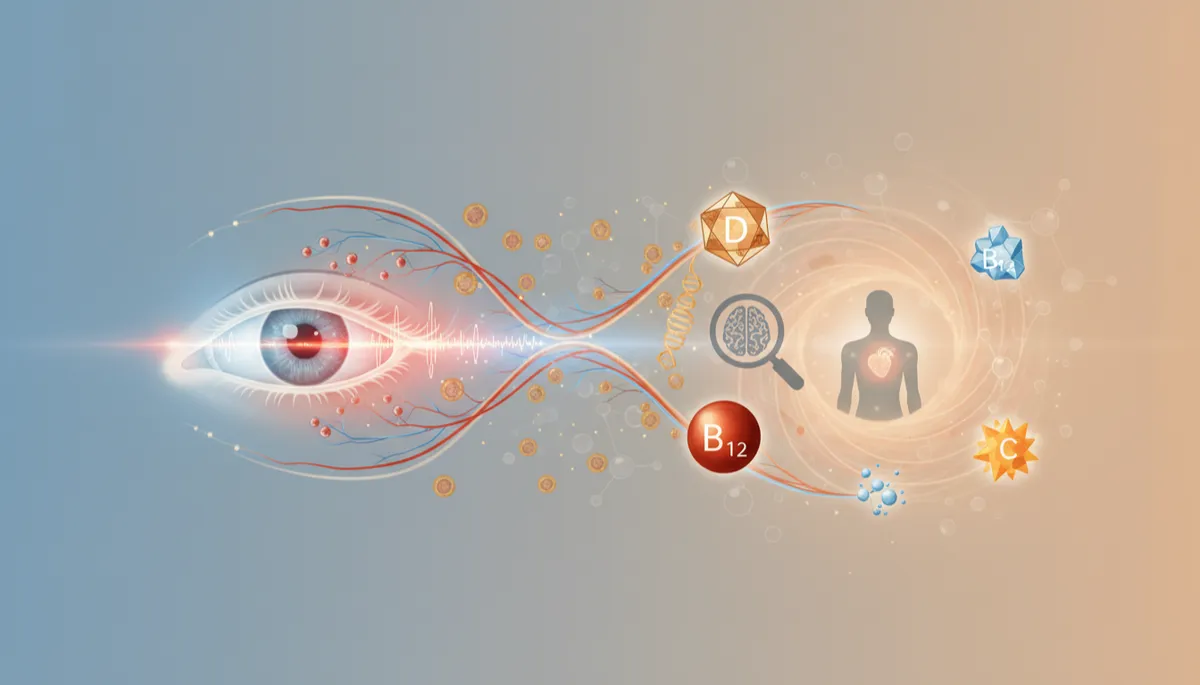
Skin Health, Under-Eye Rejuvenation, Radiofrequency, Red Light Therapy, Nutritional Blood Work
Why I Check Your Blood Work Before Doing Under-Eye Radiofrequency Treatments
By Your Esthie with the Bestie, Deana 💕💖 | Award- Winning Clinical Aesthetician, South Edmonton
Published: November 23, 2026
You want brighter, tighter under-eyes. I get it—those little crescents of crepey skin and stubborn darkness bother almost everyone who walks into my treatment room. But before I even think about turning on a radiofrequency handpiece or bathing your under-eyes in Red Light, I’m going to ask about something that surprises a lot of people: your blood work, your vitamins, and your lifestyle habits.
Everyone Wants Bright, Tight Under-Eyes—But At What Cost?
The under-eye area is one of the most requested treatment zones in modern aesthetics. People come in clutching screenshots of filtered influencers, asking for:
Less crepeiness and fine lines
Fewer dark circles and that “I haven’t slept in three years” look
Tighter, smoother skin that doesn’t collapse when they smile
Under-eye Radiofrequency (RF) and Red Light therapy are absolutely part of my toolkit. The 2025–2026 research on periorbital RF is strong: studies show meaningful wrinkle reduction, improved elasticity, and high patient satisfaction with minimal downtime. But here’s the part social media usually skips: these devices don’t magically create collagen out of thin air. They work with what your body already has—or doesn’t have.
If your internal health is depleted, inflamed, or starved of key nutrients, your results will reflect that. This is why, in my practice, we talk about blood work and lifestyle before we talk about “how many sessions” you’ll need. It’s not overkill; it’s clinical responsibility.
Devices Need Fuel: How RF and Red Light Actually Work
Radiofrequency: Controlled Heat for Collagen Remodeling
Radiofrequency devices deliver controlled heat into the dermis (the deeper layer of your skin). That heat does two main things:
Immediate collagen contraction: Existing collagen fibers tighten slightly, giving a subtle early “snugging” effect around the under-eye.
Long-term collagen stimulation: Over weeks to months, the controlled thermal injury tells your fibroblasts (collagen-producing cells) to lay down new collagen and elastin. That’s where the real firming and smoothing come from.
Recent clinical trials on periorbital RF—whether microneedling RF, monopolar tips, or bipolar systems—show 25–50% wrinkle reduction and measurable tightening over several months. That’s not magic. That’s biology responding to stimulus. But biology only performs when it has the raw materials it needs.
Red Light Therapy: ATP, Microcirculation, and Cellular Energy
Red and near-infrared light work a little differently. They don’t heat the skin the way RF does. Instead, they’re absorbed by structures inside your cells—especially the mitochondria, your cells’ powerhouses. This can:
Increase ATP (cellular energy) production, so cells have more energy for repair and regeneration.
Support microcirculation, gently improving blood flow in the area, which can help nutrient delivery and waste removal.
Support collagen synthesis and reduce inflammation markers in the skin over time.
Lovely, right? But again, let’s be clear: if your body is missing essential vitamins, minerals, and amino acids, there’s only so much ATP and collagen magic we can squeeze out of tired, nutrient-depleted tissue. Light can’t fix what your bloodstream never delivers.
Why Blood Work Matters Before I Go Near Your Under-Eyes
Let’s talk about the unsexy but crucial part: your labs. I’m not asking for blood work because I’m nosy. I’m asking because your blood is the delivery system for every single building block your skin needs to respond to treatment. If that delivery system is running on fumes, we need to know.
Key Nutrients I Care About for Under-Eye Healing and Collagen
Vitamin C: Required for collagen synthesis. Research shows deficiency can lead to rough, fragile skin and impaired collagen formation. If you’re low in Vitamin C, your fibroblasts can’t build quality collagen, no matter how expensive the device is. (NCBI, 2017)
Vitamin D: Supports skin cell growth and repair and modulates inflammation. Low Vitamin D has been linked with increased sensitivity and inflammation in skin, which can slow healing post-treatment. (Healthline, 2024)
Iron: Iron deficiency can contribute to pale, sallow skin and worsen some under-eye darkness because of reduced oxygen delivery and changes in hemoglobin. It also impairs wound healing. (Dermatology Times, 2023)
Vitamin B12 and other B vitamins: Important for cell division, red blood cell formation, and nervous system health. Deficiencies can contribute to fatigue, poor circulation, and sluggish skin repair.
Essential fatty acids (omega-3, omega-6): Help maintain the skin barrier and regulate inflammation. Deficiency shows up as dry, flaky, irritated skin that doesn’t bounce back well after procedures.
Protein status: Collagen is a protein. If your overall protein intake is poor, or you’re in a catabolic state, your skin simply doesn’t have the amino acids to build structure. That can mean sagging, slower tightening, and underwhelming RF results.
Studies on nutritional deficiencies consistently show delayed wound healing, increased dermatitis, and reduced skin integrity when vitamins like C, D, E, zinc, and essential fats are low. When I run RF over your under-eyes, I am intentionally creating controlled micro-injury. Your body’s ability to repair that injury is what gives you the glow. If the repair team is under-staffed and underfed, your outcome will be flat—no matter how “advanced” the device is.
Inflammation, Sleep, and Systemic Stress: The Silent Saboteurs
Beyond vitamins, I’m interested in your overall inflammatory and metabolic status. Chronically high inflammation, poor sleep, unmanaged stress, and blood sugar swings all show up under the eyes first. Think puffiness, dullness, and that grayish-blue tint that concealer can’t fully hide.
Poor sleep: Disrupts collagen repair cycles and increases cortisol, which can break down collagen and thin the skin over time.
Chronic stress: Keeps your body in survival mode, not “beauty repair” mode. The under-eye area is too delicate to hide that.
Systemic inflammation: Makes tissue more reactive and slower to recover, which means more redness, longer downtime, and less impressive tightening from RF.
📌 Key Takeaway: Running RF on nutrient-deficient, inflamed tissue is like renovating a house while someone keeps stealing your building materials at night. You’ll spend money, but you won’t love the result.
Want to Go Deeper? Start With Internal Skin Education
💡 Digital Guides / PDFs: Want to understand how internal nutrition impacts your skin's ability to heal and produce collagen? Explore our digital skin guides and online PDFs [INSERT PDF GUIDE LINK HERE] to get started on your holistic routine.
If you’re the kind of person who likes to know why before you say yes to a treatment plan, you’re my kind of client. My digital guides break down, in plain language, how nutrients, hormones, sleep, and stress interact with your skin behavior! Because no, it’s not “just skincare”—it’s physiology with a side of strategy.
The Consult-First Philosophy: Why I Don’t Rush to Treat
Let me be very clear: refusing to jump straight into under-eye RF is not me being difficult; it’s me protecting your face, your wallet, and your expectations. A proper consult that includes discussion of blood work, lifestyle, and medical history is an act of care, not delay.
What I’m Evaluating Before I Say “Yes” to RF Under the Eyes
Genetics: Some people have naturally deeper-set eyes, thinner skin, or more visible vasculature. RF can help texture and mild laxity, but it won’t rewrite your bone structure or erase every shadow. We talk about realistic outcomes from the start.
Vascular pooling: Blue or purple darkness is often blood showing through thin skin, or sluggish venous return. RF can thicken the skin slightly over time, but if your issue is mainly vascular, we may need to address circulation, allergies, or even sinus health alongside treatment.
Stress and sleep: If you’re sleeping four hours a night, living on caffeine, and your cortisol is in the stratosphere, your under-eyes will tell on you. Devices can help, but they can’t outwork a chronically overextended nervous system. We may still treat—but we’ll treat with full honesty about limits.
Nutrient absorption and gut health: You can “take all the vitamins” and still be deficient if your gut isn’t absorbing properly. Bloating, IBS, chronic reflux, or restrictive dieting are all red flags that we might need to think beyond topicals and tech.
Dehydration: Dehydrated skin exaggerates crepeiness and fine lines. If you show up dry, puffy, and salt-loaded from last night’s takeout, I’m not going to pretend a single RF session will “erase” that. We rehydrate, rebalance, and then treat.

A thorough consult prevents wasted sessions and aligns expectations with real biology.
⚠️ Warning: If a provider is happy to blast your under-eyes with RF without asking about health, meds, or lifestyle, that’s not “convenient”—it’s careless.
Lifestyle Culprits Behind Dark Circles and Laxity
Let’s name the usual suspects, because under-eye darkness and laxity are rarely “just aging.” They’re often a loud, visible summary of what’s happening inside your body and your daily routine.
1. Genetics and Anatomy
If your parents and grandparents all have deep-set eyes and pronounced tear troughs, we’re not going to “RF that away.” What we can do is improve skin quality, collagen density, and fine lines so the area looks fresher and more supported. But I will never sell you a fantasy that ignores your bone structure.
2. Vascular Pooling and Circulation Issues
Dark circles often come from blood and pigment visible through thin skin. Allergies, nasal congestion, and poor circulation can all lead to blood “pooling” under the eyes. RF and Red Light may support microcirculation and skin thickening, but if you never treat the underlying congestion or circulation, you’ll keep chasing the same darkness every few months.
3. Chronic Stress and Sleep Debt
Your under-eyes are brutally honest about your lifestyle. Chronic stress and sleep deprivation flatten your glow, slow collagen repair, and make puffiness and darkness more pronounced. RF and Red Light can help you look more rested, but if your life is permanently in emergency mode, your results will always be fighting an uphill battle.
4. Nutrient Absorption, Restrictive Diets, and Gut Health
Crash diets, chronic under-eating, and gut issues that impair absorption can starve your skin of the nutrients it needs. Remember: Vitamin C, D, iron, zinc, essential fats, and protein are all non-negotiable players in skin repair. If your labs and symptoms suggest malabsorption or deficiency, I’ll encourage you to work with a medical provider or nutrition professional alongside any aesthetic plan.
5. Dehydration and Lifestyle Habits
High-salt diets, alcohol, and chronic low water intake all show up as puffiness, fine lines, and dullness under the eyes. The under-eye skin is thin and delicate; it reflects every late-night cocktail and every day you “forget” to hydrate. Devices can smooth and tighten, but if your lifestyle keeps pulling the rug out from under your results, you’ll never get that long-lasting, firm under-eye you’re chasing.
💬 Real Talk: I’m not here to shame your habits. I’m here to connect the dots so you understand why another “miracle” device session isn’t fixing what your daily routine keeps recreating.
Start With a Signature LPB Facial & Honest Assessment
✨ Signature LPB Facial & Assessment: Ready for an honest, results-driven skin assessment? Start with our Signature LPB Facial—book or explore how we customize every treatment to your skin's unique needs: [INSERT LPB FACIAL BOOKING LINK HERE].
Before we commit to a full under-eye RF series, I like to see how your skin behaves with a comprehensive, clinically designed facial. During the Signature LPB Facial, I’m not just pampering you—I’m gathering data:
How quickly does your skin flush and calm down?
How does your under-eye area respond to gentle stimulation and hydration?
Do you show signs of barrier impairment, dehydration, or inflammation that would make RF risky or less effective right now?
From there, we can decide together whether you’re ready for under-eye RF and Red Light, or whether we need a phase of internal and topical support first. That’s not me selling you “extra steps”—that’s me making sure when we do use advanced devices, your body is primed to deliver the best possible result.
The Bottom Line: Collagen Is Built, Not Wished Into Existence
Under-eye RF and Red Light therapy are powerful tools. The latest research backs their ability to tighten, smooth, and rejuvenate the delicate periorbital area with minimal downtime and high satisfaction. But they are not stand-alone miracles. They are amplifiers of what your body is already capable of doing—if it has the internal resources to do it.
That’s why I ask about your blood work. That’s why we talk about Vitamin D, iron, B12, Vitamin C, protein, essential fats, sleep, stress, and gut health. Topicals and clinical devices work best when your cells have the building blocks to actually build collagen, restore barrier function, and repair micro-injury. Otherwise, you’re paying for high-tech heat and pretty red lights with low-tech results.
True under-eye rejuvenation is a synergy: internal optimization + advanced clinical technology + realistic expectations. When we approach your skin from that angle, your treatments stop being random experiments and start being a strategic, long-term investment in how you look and feel.
Are you more interested in quick fixes, or are you ready to look at your labs, your lifestyle, and your under-eyes as one connected story?